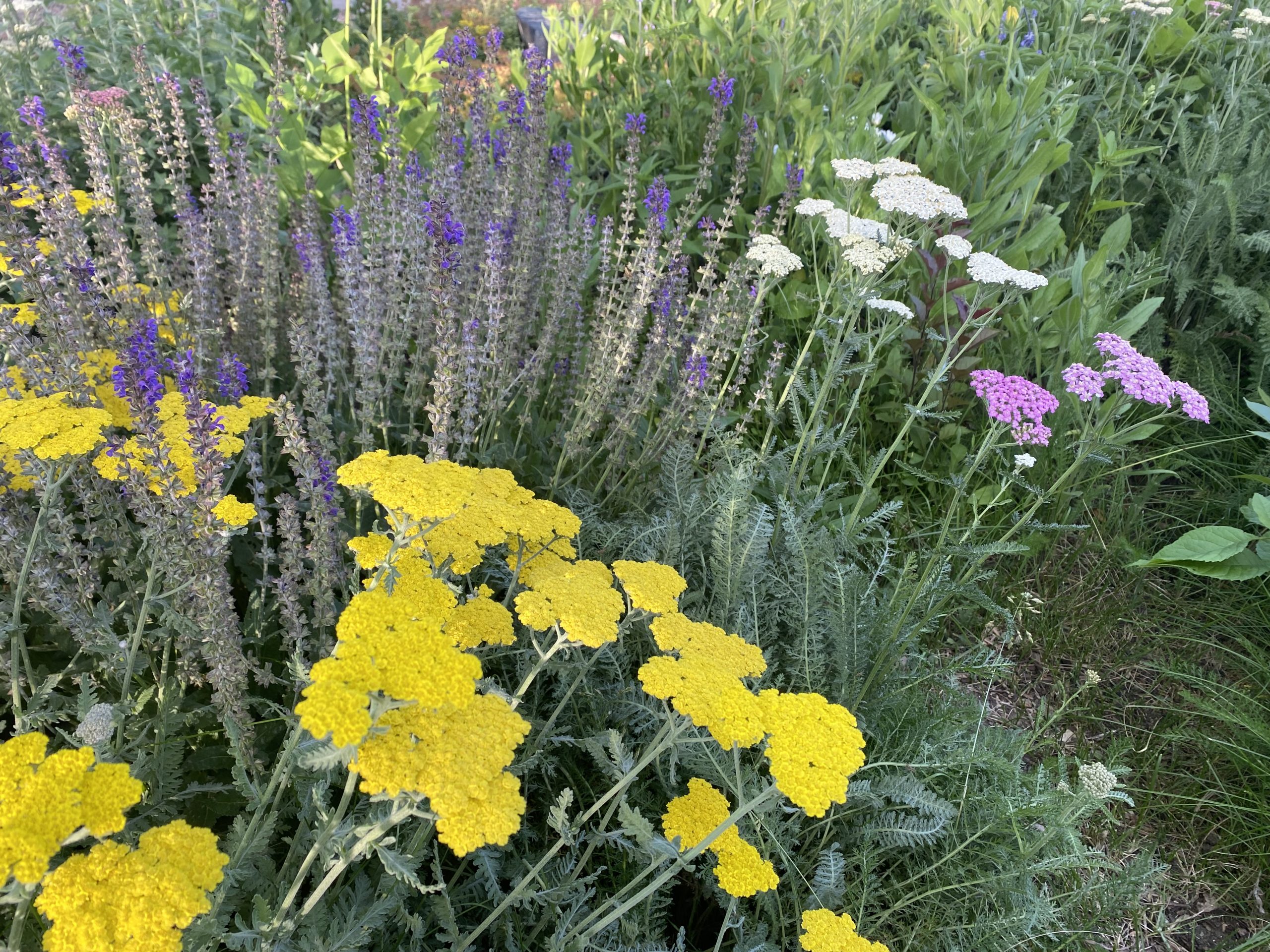
Our featured flower of the month is yarrow. Yarrow, known botanically as Achillea millefolium, is a resilient perennial native to the temperate regions of Europe, Asia, and North America. Its history is deeply rooted in Greek mythology, specifically named after the hero Achilles. Legend suggests that he used the plant’s leaves to treat the wounds of his soldiers during the Trojan War, a story that aligns with the plant’s long-standing use in traditional medicine as a styptic to stop bleeding. This rugged heritage is reflected in its common names, such as soldier’s woundwort and thousand-leaf, the latter referring to the plant’s highly dissected, feathery foliage.
In terms of cultivation, yarrow is favored by gardeners for its extreme hardiness and ability to thrive in neglected spaces. It performs best in full sun and actually prefers poor to average soil that is well-drained. Planting yarrow in overly fertile ground can lead to floppy stems and diminished flowering, as the plant is adapted to leaner environments. It is remarkably drought-tolerant once its root system is established, making it an ideal choice for xeriscaping or wildflower meadows. Maintenance is minimal, though deadheading spent blooms can encourage a second flush of color, and occasional thinning may be necessary to manage its spread via underground rhizomes. While the wild variety is often white or soft pink, modern gardening cultivars now provide a wide range of colors, including vibrant yellows, oranges, and deep reds. Cheers
 By
By