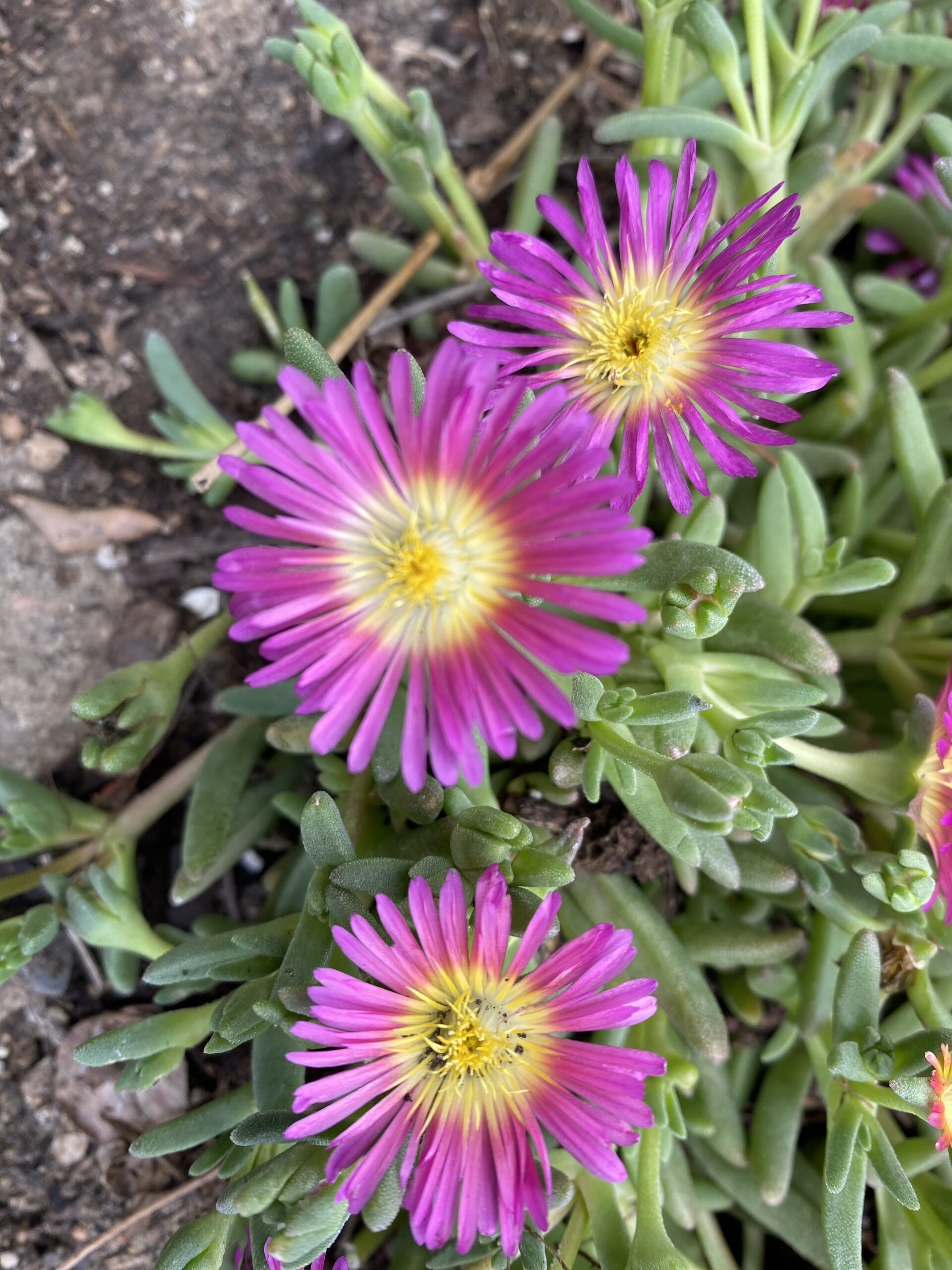
Our featured flower of the month is Delosperma. The genus Delosperma, commonly known as the ice plant due to the glistening, light-refracting bladder cells on its succulent foliage, is primarily native to the sun-drenched, arid regions of Southern and Eastern Africa, with the highest concentration of cold-hardy species originating from the high-elevation mountains of Lesotho and South Africa. Formally classified by botanist N. E. Brown in 1925, the genus name translates from Greek to mean “evident seed,” a reference to its unique hygrochastic seed capsules that unfold like origami when wet to expose the seeds directly to rainfall. Cultivating these resilient, low-growing perennial ground covers requires replicating their rugged native habitats; they thrive in full sun and strictly require lean, sharply drained, sandy or gravelly soil, as heavy clay or standing water will quickly induce fatal root rot. Once their shallow, ramified root systems are established, ice plants display exceptional drought and heat tolerance, making them a staple for water-wise xeriscaping, rock alpine gardens, and retaining walls. Maintenance is minimal, typically restricted to stopping supplemental irrigation in the autumn to allow the succulent tissues to naturally dehydrate and harden off for freezing winter temperatures, followed by a light shearing in early spring to clear away any frost-damaged stems and stimulate fresh, summer-long blooming. Cheers
Light Mode
Dark Mode
Search The Query
 By
By