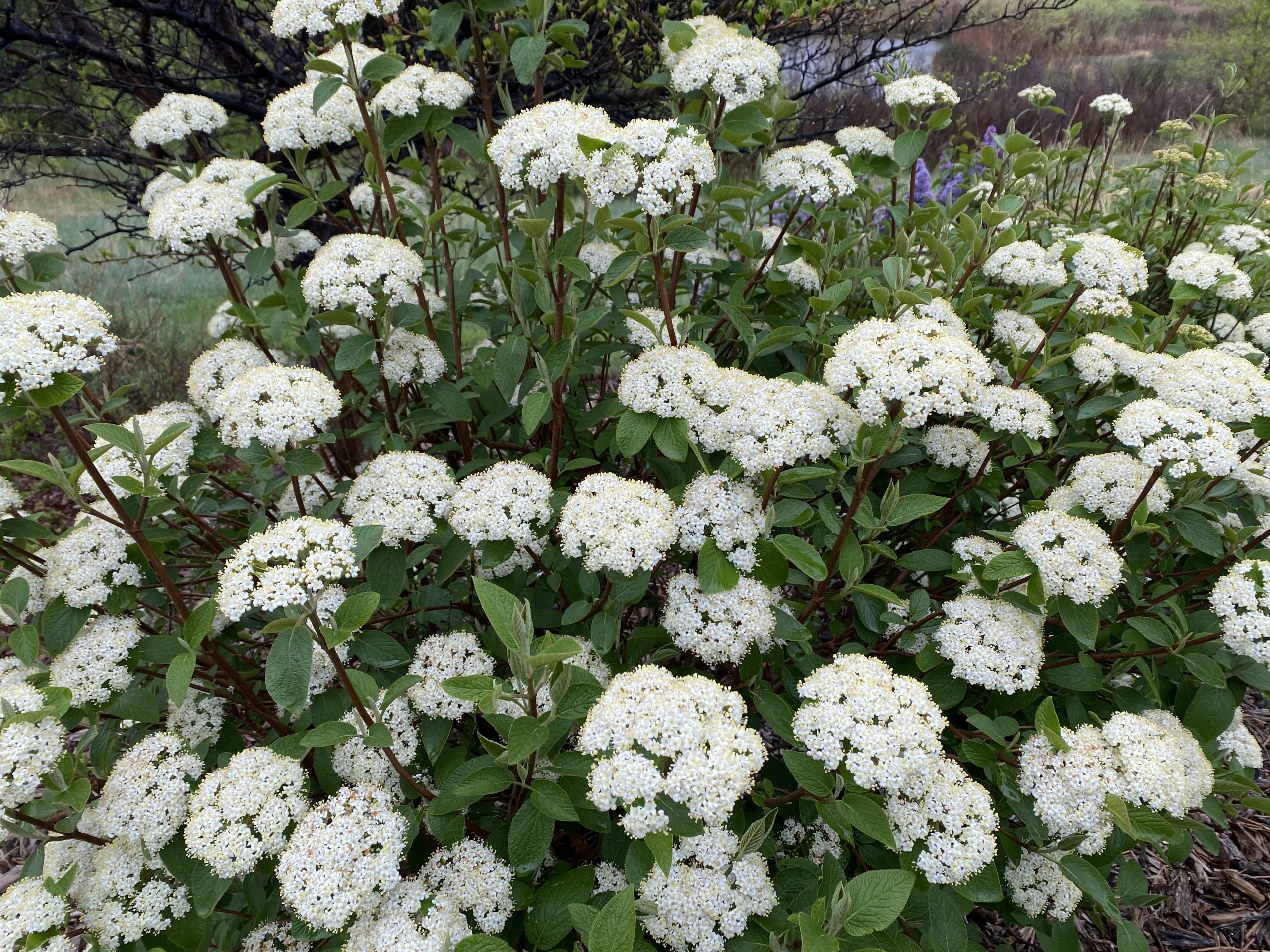
The last and final shrub that I would like to feature is Viburnum. Viburnums are a diverse genus of about 150 species of shrubs and small trees, primarily native to the temperate regions of Asia and North America, with some species found in Europe, Africa, and Malaysia. These plants have gained popularity in horticulture for their ornamental value, featuring attractive foliage, fragrant clusters of white or pink flowers in spring, and colorful berries in the fall that attract birds.
Cultivation of viburnum is relatively straightforward. They are adaptable to a wide range of soil types, including clay, loam, and sandy soils, and can tolerate both acidic and alkaline conditions, though they generally prefer well-drained soil rich in organic matter. Most viburnums thrive in full sun to partial shade, with at least 4-6 hours of sunlight per day being ideal for optimal flowering and fruiting.
Planting is best done in spring or fall, ensuring adequate spacing to accommodate the mature size of the chosen variety. Regular watering is important, especially during the first growing season to establish a strong root system. Once established, many viburnums are relatively drought-tolerant. Fertilizing is usually not necessary, but a balanced, slow-release fertilizer can be applied in early spring if desired.
Pruning requirements vary depending on the species; however, since most viburnums bloom on old wood, heavy pruning is generally not recommended as it can reduce flowering. Light pruning to shape the plant or remove dead or crossing branches should be done immediately after flowering. Propagation can be achieved through seeds, although this can be a slow process, or more commonly through cuttings taken in late spring to early summer or hardwood cuttings in late fall to winter. Cheers
 By
By